
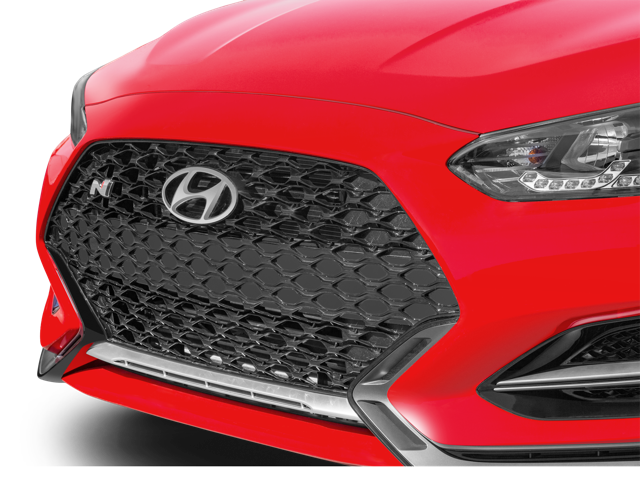
Hyundai Veloster

The Hyundai Veloster is a fun-to-drive hatchback with a unique three-door design, and it finished its ten-year run with a performance-oriented bang. Coming into its final production year, the Veloster was offered exclusively as the high-performance N, boasting 275 horsepower from its turbocharged engine. A sport-tuned suspension, grippy tires, and strong brakes ensured excellent performance; however, customers had to endure a stiff ride and intrusive road noise. Sport seats and an intuitive infotainment system, displayed on an eight-inch touchscreen, highlighted the cabin, and the additional right-side door provided easy access to the rear seat.
Explore the evolution of the Hyundai Veloster
Get our expert take on used Hyundai Veloster models, or view year-by-year changes.


Second generation Hyundai Veloster
After taking a year off, the Hyundai Veloster returned in 2019 with a complete redesign. The unusual body style featuring one door on the left and two on the right remained, but the exterior design took on crisper lines with a new grille design, available LED headlights and running lights, and a lower roofline for an overall sportier look. Hyundai also added the new Veloster N, which stood out from the rest of the lineup with a unique grille, exclusive aero features, a larger rear spoiler, and available 19-inch alloy wheels. The new Veloster received a refreshed cabin that offered a functional interior space as well as clear controls and an intuitive infotainment system.
The second-generation Veloster arrived with three engine options. A 2.0-liter four-cylinder engine was the base powertrain, while a turbocharged 201-horsepower engine powered the R-Spec and Turbo trims. Power bumped up to a maximum 275 horsepower for the high-performance Veloster N.
Model highlights
High-performance Veloster N
Unique three-door configuration
Standard Apple CarPlay®/Android Auto™
Standard six-speed manual gearbox
Available eight-inch touchscreen display (standard in 2022)
First generation Hyundai Veloster
When Hyundai introduced the all-new Veloster, the small hatchback attracted plenty of attention, and not just because of its sporty styling. In an unusual move, Hyundai gave the Veloster one longer door on the left and two doors on the right. This allowed the South Korean brand to maintain the Veloster’s sporty shape while providing easy access to the third row. The Veloster featured a spacious cabin with functional room for front and rear passengers, plus the convenience of a hatchback for easy cargo loading. A seven-inch infotainment display was standard, and in 2017, Hyundai offered a Value Edition that included Apple CarPlay® and Android Auto™.
The Veloster arrived on the scene with a single engine: a 1.6-liter four-cylinder driving the front wheels. With a standard six-speed manual gearbox, the small engine didn’t offer much in terms of performance, but it did deliver up to 37 mpg on the highway.
The following year, Hyundai turned up the heat with a turbocharged engine that bumped power up to 201 horses.Model highlights
Turbo engine (added in 2013)
Apple CarPlay®/Android Auto™ (added in 2017)
Introduced three-door body style
Fuel-efficient base engine
Available dual-clutch gearbox
Changes by year
Latest generation from 2019 - 2022
2022 Hyundai Veloster
Highlights
Standard Veloster discontinued, leaving only Veloster N
Final production year
Learn more
2021 Hyundai Veloster

Highlights
Available eight-speed dual-clutch gearbox
New sport front seats
Learn more
2020 Hyundai Veloster

2019 Hyundai Veloster

Highlights
Complete redesign
New base engine
High-performance Veloster N added
Learn more
Previous generation from 2012 - 2017
2017 Hyundai Veloster

Highlights
Apple CarPlay®/Android Auto™ made standard
Veloster Value Edition offered with Turbo features and base engine
Learn more
2016 Hyundai Veloster
Highlights
Rally Edition added
Seven-speed automatic transmission for Turbo
Learn more
2015 Hyundai Veloster
Looking for 2012 models or older?
CarMax only sells 2013 models and newer. But no matter the year, we'll happily buy your car.
Reliability
RepairPal gave the Hyundai Veloster an overall reliability rating of 4 out of 5 stars, which RepairPal describes as Above Average. This rating ranks Hyundai Veloster 30th out of 46 among Compact Cars.
RepairPal reports that the average total annual cost for repairs and maintenance on a Hyundai Veloster is $477, compared to an average of $453 for Compact Cars and $591 for all the vehicles RepairPal considered in its dataset.
According to RepairPal, Hyundai Veloster owners bring their vehicles into a repair shop for unscheduled repairs an average of 1.0 times per year, compared to an average of 1.1 times for Compact Cars and 1.3 times for all the vehicles RepairPal considered in its dataset.
RepairPal reported that the probability of a repair being a severe or major issue is 14% for the Hyundai Veloster, compared to an average of 12% for Compact Cars and 14% for all the vehicles RepairPal considered in its dataset.
Perry Stern has been writing about cars for almost 30 years and has been an enthusiast for much longer than that. Contributing to multiple automotive publications, Perry drives almost every new car on the market, ranging from base-level Kias to exotic high-performance Lamborghinis. But his favorite is still the 2006 Mazda Miata parked in his garage.
We hope you found this information helpful. This content is intended to inform and is not meant to provide legal, financial or investment advice. We make every effort to provide accurate information, but please verify before transacting and consider talking to a qualified professional about your unique circumstances.
Statements of fuel economy or EV range are based on EPA and other third-party estimates for vehicles when new. Fuel economy and EV range will degrade with time and vary based on age, driving conditions, vehicle history, and other conditions. See fueleconomy.gov for more info.
Editorial content contained on this page comes from Edmunds.com, Inc., a subsidiary of CarMax Enterprise Service, LLC, and information related to featured vehicles comes from third-party sources, including manufacturer information. Product and company names may be trademarks or registered trademarks of third-party entities. Use of them does not imply any affiliation with or endorsement by these entities. By clicking on any video links, you will be taken to a third-party site maintained by YouTube, Inc.